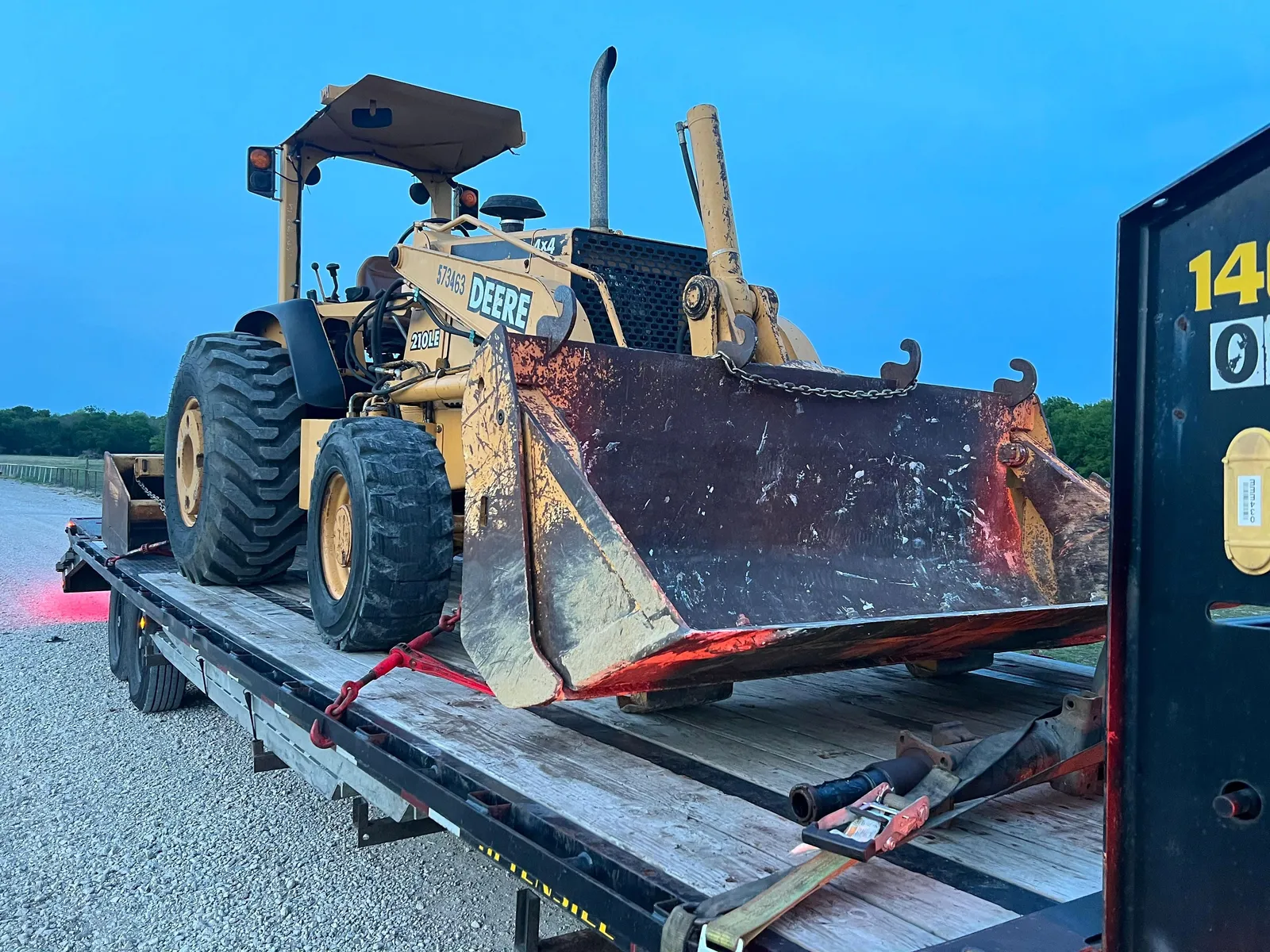
Equipment moves go wrong on details. A loader that's a few inches taller than expected, a site with no loading ramp or a weight nobody checked can turn a simple flatbed load into a different trailer, a permit or a missed pickup.
Use the first call to close those gaps.
1. The machine itself
- Make, model and year if the shipper knows them.
- Attachments: bucket, forks, breaker, extra counterweights. Are they shipping on the machine or separately?
- Tracks or tires.
2. Weight and dimensions
Ask for operating weight, length, width and height with attachments as they'll ship. If the shipper doesn't know, say so in your notes and plan to confirm from a spec sheet or a photo with a tape measure.
As a general reference, US interstate rules are built around an 8 ft 6 in (102 in) width and an 80,000 lb gross vehicle weight, with legal height commonly around 13 ft 6 in depending on the state. Loads beyond those usually need permits and may need a different trailer. These are general references, not legal limits: always check current size, weight and permit rules for every state on the route.
3. Loading and unloading
- Is there a loading dock, ramps or a forklift at pickup and at delivery?
- Will the machine be driven on, or does it need to be lifted?
- Who's on site to load it, and will they have keys?
4. Site access
Ask about gates, soft ground, low wires, tight turns and whether a long trailer can get in and turn around. Job sites and farms often have limits a shipper doesn't think to mention.
5. Timing
Get the shipper's window in their words — flexible, a fixed date, or "as soon as possible" — and whether the site has hours.
How LeadSignal marks the gaps
When a shipper can't confirm weight, dimensions or site access, a LeadSignal equipment lead says "unconfirmed" instead of estimating. That's your list for the first call.